
"as well as varieties"
10000 article(s) found

A brief introduction to the History and Culture of the Origin and Development of Hartmann Fine Coffee beans with Citrus aroma
In such a unique planting environment, Poket is naturally not the only coffee king with emerald rose summer, both in terms of flavor, quality and value, but I think it is quite extravagant to drink rose summer every day, even if there is no economic pressure. it's not like eating shark's fin and bear's paw every day. The same is true of coffee. Only by dabbling in a wide range of subjects can you enjoy the pleasure of tasting coffee more.
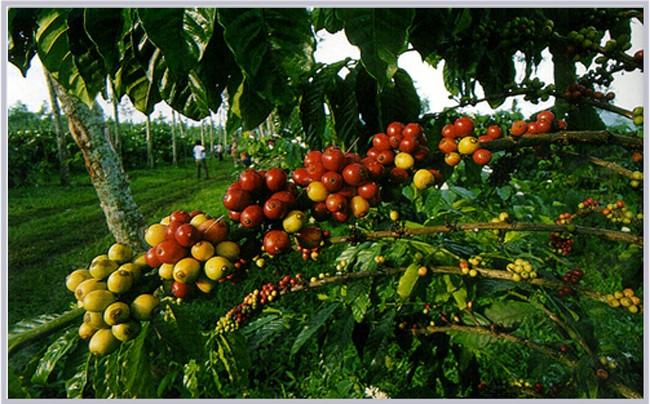
Coffee Estate Knowledge Points: Collection and classification of world boutique coffee estates in detail
Coffee comes from coffee beans, which are harvested and processed from the fruits of trees. Coffee trees grow at the equator as the center, between 25 degrees north and south latitude, known as the coffee belt in tropical or subtropical countries home, coffee beans are currently. Coffee comes from coffee beans, which in turn are harvested and processed from the fruits of trees. Coffee trees grow at the equator.

Hartman Fine Coffee Bean with excellent sweetness A brief introduction to geographical location, climate and altitude
On the basis of very excellent quality, the very people-friendly price makes this coffee bean cost-effective. What is special about this coffee bean is that it is made up of three varieties, of which 40% are rosy summer varieties, giving this coffee a distinct rosy summer flavor. According to the information obtained, due to the historical reasons of the manor, the early rose summer varieties were in pursuit of yield at that time.

The main coffee producing areas in the world introduce the types of fine coffee beans.
Coffee comes from coffee beans, which are harvested and processed from the fruit of trees. Coffee trees grow at the center of the equator, between latitudes of 25 degrees south and north, and are called the homes of tropical or subtropical countries called coffee belts. At present, there are about 60 coffee-producing countries. Coffee is produced in South America, Central America, the West Indies, Asia, Africa, Arabia, the South Pacific and

Introduction to the Variety characteristics and producing areas of Coffee Flavor description in Ethiopian Manor
Ethiopian Manor Coffee Flavor description method Variety characteristics production area introduction the coffee used by the flower butterfly comes from the Baru volcano region of the Boqui specialty region of Panama. Up to 1600 meters above sea level, the special microclimate leads to abundant rainfall and great temperature difference between day and night in this area. coupled with the fertile volcanic soil, as well as the meticulous planning and management of the harvest period, the coffee here is not only thick but also

African boutique coffee Ethiopian Yega Sheffield Shakiso characteristic manor flavor taste cooking method
Near the famous Kaffa Forest in Ethiopia, Africa, the whole region is a wild coffee forest with at least 1000 coffee varieties. At present, scholars and experts recognize that Arabica varieties are the birthplace of Arabica varieties and are also the treasure house of global coffee genes. The coffee variety commonly known as Ethiopia's Sheffield is Heirloom, but it does not refer to a single specific variety, in Heirloom.

A brief introduction to the bright and lively Panamanian butterfly boutique coffee bean flavor, taste and aroma characteristics
The unique Panamanian coffee is classified and numbered into small batches, which are designed to have a small capacity for optimal management, and the classification number allows buyers to understand and track the information of the whole process. Because of its small quantity, Panamanian coffee products are based on special coffee. The country provides its high-quality products to specialized stores all over the world, such as Denmark, Britain, Greece,

Introduction of several well-known coffee varieties
Civet coffee is a recently invented coffee, produced in Indonesia, coffee beans are one of the civets' food range, but the coffee beans cannot be completely digested by the digestive system. The coffee beans are fermented in the civets' intestines and stomach and excreted by feces. The locals take out the coffee beans in the civet feces and then do the processing, that is, the so-called Kopi Luwak, this coffee tastes unique, taste not

Flavor description of Xidamo Shakiso producing area with endless aftertaste introduction to the characteristics of grindness varieties
The coffee in Sidamo has a variety of flavors. Different soil types, microclimates and countless native coffee species, towering mountains, highlands, plateaus, valleys and plains, diverse topography, and the geology of the area belongs to nutrient-rich, well-drained volcanic soil. the depth of the soil is nearly two meters, and the surface soil is dark brown or brown. The biggest advantage of the place is
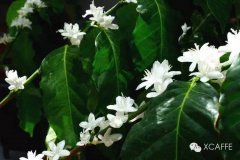
Bolivia, located near Brazil, the largest coffee producer in South America, is still an underrepresented country.
Bolivia, located near Brazil, South America's largest coffee producer, is still a place unknown to many coffee lovers. But the country is famous for producing high-quality coffee and has good conditions for coffee cultivation and production as well as Brazil. Bolivian raw beans are large and uniform in size, and the green ones are high-quality raw beans. The majority of Bolivian coffee varieties are Cadura.

A brief introduction to the origin, development, history and culture of bright and lively Panamanian butterfly boutique coffee beans
Panamanian coffee is classified and numbered into small batches, which are designed to have a small capacity for optimal management, and classification numbers allow buyers to understand and track the entire process. Because of its small quantity, Panamanian coffee products are based on special coffee. The country provides its high-quality products to specialized stores around the world, such as Denmark, Britain, Greece, Norway, Sweden and South Korea.

Introduction of Arabica Coffee Bean species and Origin comparison of Arabica Coffee varieties and characteristics
Professional coffee knowledge exchange more coffee bean information please follow the coffee workshop (Wechat official account cafe_style) Arabica, fine coffee turquoise bioscience in the boundary, gate, class, order, family, genus, species division, do you still remember? Don't say you gave it back to the junior high school biology teacher. A few years ago, the coffee industry began to emphasize Arabica coffee beans; in fact, it is now a boutique.

Kenya SL28 34 hand temperature? Historical Story of K7BatianRuiru characteristics of Kenyan Coffee varieties
Qianjie has recommended Asaria coffee beans from Kenya more than once. I believe you are already very familiar with the cooking details of this coffee bean. Filter cup: V60 filter cup water temperature: 90-92C powder quantity: 15g powder-to-water ratio: 1:15 grind: medium and fine grinding (Chinese standard 20 sieve pass rate 80%) flushing and cooking method: staged extraction with 30 grams of water for steaming, stuffy
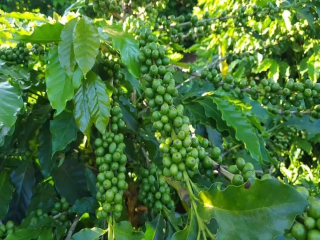
Introduction of Brazilian natural decaf coffee variety AC1
Nowadays, as more and more people become interested in natural decaf coffee, decaf coffee appears more and more frequently, both in stores and in the auction houses of fine coffee and raw beans. Such as Laurina and Aramosa, as well as the Ethiopian variety AC1 that has been excavated in recent years. What is AC?
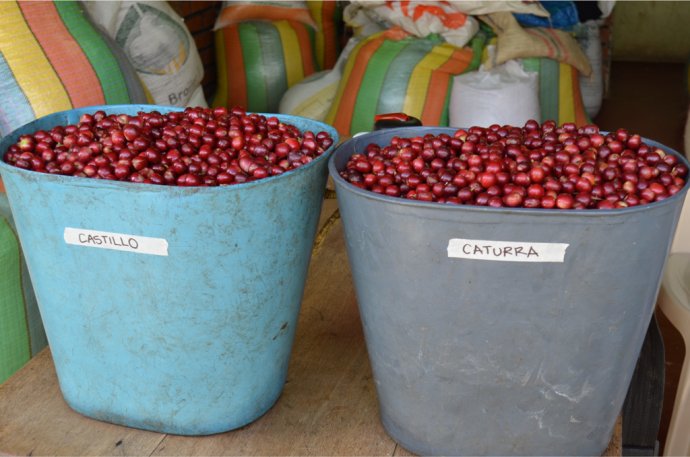
Arabica coffee varieties: Castillo Castillo Introduction
Professional barista exchanges, please pay attention to coffee workshop (Weixin Official Accounts cafe_style) Coffee varieties: Castillo Castillo introduced Castillo, or castillo variety, or castillo cultivar, is a coffee variety developed by Colombia Coffee Research Institute in 2005 based on enhanced plant disease resistance. It is currently the main cultivar in Colombia. ca

Introduction to the taste characteristics of Colombian Ramon coffee flavor description grinding scale varieties
Colombian Ramon Coffee Flavor description Grinding scale varieties taste characteristics introduce the favorable temperature range, moderate amount and Rain Water distribution throughout the year, as well as some common cultural practice areas including selective logging and transformation, including washing and drying. Very suitable for the growth of coffee, mild climate, humid air, and can be harvested regardless of season. This is Colombia.

Introduction of Indonesian Mantenin Coffee Variety producing area Flavor and taste Fine Coffee
The capital Jakarta, located on the northwest coast of Java, covers an area of 740.28km and has a population of 10.187 million. It is a national political, economic and cultural center and a sea, land and air transportation hub, as well as a shipping center between southern Asia and Oceania. More than 500 years ago, Jakarta became a famous seaport for exporting pepper and spices. At that time, it was called Sunda Graba, which means coconut. Renamed Chajakarta in 1527

Introduction of varieties and flavors of Costa Rican Coffee
The flavor of Costa Rica has always been steady, without the sharpness of Guatemala, it is quite mild and supple, sour, sweet and bitter chocolate, inclusive and well-balanced, is the classic flavor of gourmet coffee. The seven major coffee producing areas are as follows: Durieba Valley (northeast of the capital San Jose), Central Valley (northwest of San Jose), and Western Valley (west of the capital).

Introduction of major coffee producing areas in the world Central and South American coffee beans, African coffee beans, Asian coffee beans
[introduction] Coffee comes from coffee beans, which are harvested and processed from the fruit of trees. Coffee trees grow at the center of the equator, between latitudes of 25 degrees south and north, and are called coffee belts in the homes of tropical or subtropical countries. at present, raw coffee comes from coffee beans, which are harvested and processed from the fruits of the trees. Coffee trees grow at the center of the equator.

What are the characteristics of Guatemalan coffee
Guatemalan coffee taste: bitter and fragrant, good taste. The coffee produced in the highland is mellow and has a good sour taste, which is well received and is the best material for mixed coffee. Guatemala extremely hard beans are elegant and sour, clean and odorless, layered, as well as green apple, berry, jasmine, orange peel, green pepper, sweet and sour fruit, sweet chocolate, and even